Wednesday, May 10, 2017

Thinking of selling your home yourself? 
Here’s what you need to know:

If you’re wondering about the value of hiring a Texas REALTOR®, you’re not alone. But before you decide to do a FSBO (for sale by owner), see if you can answer these questions.

Red sign in the shape of a home with white arrow and white text: HOME FOR SALEHow much your home is worth? When it comes to pricing, you can’t rely on estimator websites to give you an accurate value. Those sites don’t have data about what homes are selling for in your neighborhood or how your kitchen remodel affects your price. In addition, it’s easy to let your personal attachment to the property inflate the price. And be careful, because if you price it too high, it will linger on the market. But if you price it too low, you’ll lose out on money.
Can you market your property? You can put a sign in your yard, post your property to a few classified websites, and maybe make some fliers to hang. How many potential buyers do you think that will bring you? Probably not a lot.
Are you ready to show your house? If you do attract potential buyers, you’ll have to keep a flexible schedule to juggle showings. Don’t forget about the safety concerns associated with letting strangers into your home.
Can you avoid legal problems? Real estate transactions are complex, and legal issues come up frequently. One small mistake on your part could cost you big, whether it’s because you’ll lose money or end up in a lawsuit. Be ready to spend time reading through paperwork and researching to make sure you’re not breaking the law.
As you can see, selling your home on your own means investing your time in research, marketing, showing the property, and more tasks that aren’t even mentioned here. That’s probably why 87% of sellers in Texas used a Texas REALTOR® last year.
Texas REALTORS® have access to accurate data to determine the right price for your property. They’re able to market your property more extensively than you could alone. Texas REALTORS® also take care of showings and vet potential buyers for you. And they can call the Texas Association of REALTORS® Legal Hotline, staffed by five attorneys who can answer their questions about real estate law and related matters. Instead of going it alone, talk to a Texas REALTOR®, who has the experience and tools to make your home sale go smoothly.

Author: Editorial Staff, Texas Association of REALTORS®

4 reasons to contact a Texas REALTOR
Before you enter the world of real estate on your own, see if a Texas REALTOR® can help you instead. Here are four reasons to reach out to one.
A smiling man in a light-blue button-up shirt sitting next to a smiling dark-haired woman in a short-sleeved button-up white shirt across the table from a man in a suit whose back is facing the cameraWhen you want to know how much your home is worth 
While you could use a home-valuation website that tells you a number, you shouldn’t rely on it alone. These sites often don’t know the details of your property, the current market, and what buyers are looking for in your area. A Texas REALTOR® can help you determine a more accurate price for your property.

When you want help narrowing down your options 
You could spend hours and hours searching for properties online, contacting owners or their agents to see the property, and figuring out whether it’s a good deal. Or, you could hire a Texas REALTOR® to cut through the clutter by determining your needs, finding properties that fit those parameters for you, and setting up tours to see them. On top of that, they can help you figure out if the price is right and what you can afford.
When you need help navigating negotiations 
Not everyone is skilled at negotiations, but Texas REALTORS® are. They’re armed with the most up-to-date information about laws, the market, and more that puts them in a position to negotiate on your behalf with confidence.
When you value your time 
Texas REALTORS® can save you a lot of time and hassles by handling the tasks you don’t have time to manage. For example, Texas REALTORS® have experience marketing properties, which means you don’t have to come up with a plan on your own. They also facilitate and explain the entire transaction process so you don’t have to keep track of every single detail.
Author: Summer Mandell, Texas Association of REALTORS®

If you have questions regarding your property, please call us today for a FREE consultation! 
our home!

Friday, April 21, 2017

Make your offer stand out in a hot market

Real estate markets are very competitive in many parts of Texas. As a buyer, how do you differentiate your offer from others that a seller receives?
Show how serious you are
If the sellers are asking for 1% of the sales price as earnest money, offer 1.5% or 2%. The extra deposit shows sellers that you’re committed to purchasing their property.
Don’t ask for extras
How many contingencies does your offer include? Financing? Selling your current home? While you might not be able to eliminate all contingencies, limit the ones you ask for.
Connect on a personal level
Consider writing a note to the sellers about you and why you love their property, and include that with your offer. This letter isn’t a negotiation tool and should not include anything about contract terms; it’s a way for the sellers to see more just numbers when they see your offer.
Author: Editorial Staff, Texas Association of REALTORS®


3 ways to give sellers your best offer
No one wants to spend more than they have to on a property, but no one wants to lose out on the perfect place. That’s why it’s important to do a little research before making an offer on a home. Take these three steps to present a compelling offer to sellers.

Decide on the right price
Real estate markets are localized, so the sale price of a home across town may have little to do with what a home in another area of town is worth. You can determine the right price by finding out how the property compares to similar homes nearby, what Texas REALTORS® call “comps.” Comps are an important part of determining price because they reflect neighborhood conditions. Your Texas REALTOR® can help you find the best comps to use for the property you want.
Show sellers you’re serious
Hitting the sellers’ perfect price doesn’t guarantee they will accept your offer. Homeowners will consider the amount of earnest money in the proposed contract as well. A higher number shows a higher level of sincerity about the purchase and may place your offer above others.
Be flexible
Some sellers may have a strong preference for when they close on the sale. If you can meet their timeline, your offer gains strength. And when you can help it, stay away from contingencies, or make them as moderate as you can. Why? Put yourself in the seller’s shoes. A slightly lower offer may be more attractive than a higher offer that’s contingent on the buyers needing to sell their own home.
Many things combine to make an attractive offer. Your Texas REALTOR® can help put together an offer that gives you the best chance of getting the home you want at terms that are favorable to you.
Author: Summer Mandell, Texas Association of REALTORS®

If you have questions regarding your property, please call us today for a FREE consultation regarding your home!


Wednesday, February 1, 2017

Why you should consider selling a home you haven’t even bought


01/13/2017 | Author: Editorial Staff
You’ll consider several criteria when purchasing your first home, but have you thought about how easy it will be to sell later? Things like location, features, and nearby amenities—the same criteria you’ll consider—can affect a property’s resale value.
You like it, but will they?
If it’s your first home, you may only plan to stay in it for a few years. And while you may be willing to buy a house that, for example, is located on a busy street or close to railroad tracks, ask yourself, “Will future buyers feel the same way?”
Keep the next buyers in mind
Once the home is yours, think about how to improve or maintain the home to appeal to future buyers. This can include things like upgrading bathroom or kitchen fixtures, improving the landscaping, or using paint colors that have broad appeal.
Ask an expert
If you have questions about whether a property will be easy or hard to sell in the future, please call us for a FREE consultation regarding your home!

Sunday, November 6, 2016


4 EASY WAYS TO UPDATE THE KITCHEN
 BEFORE YOU SELL

10/28/2016 | Author: Alexandra Bohigian, guest expert, Texas Association of REALTORS
Homebuyers can overlook many deficiencies in a property, but the kitchen isn’t usually a place they like to compromise. As such, it’s a great place to make small improvements before you sell. Here are four things you can do to make your kitchen a selling point.
Freshen the paint and backsplash
One of the easiest updates to your kitchen is to paint the walls and redo the backsplashes to fit today’s trends. Many homeowners are opting for neutral colors, such as gray or ivory, for walls and backsplashes. Not only do these colors provide a modern feel, they also provide a blank slate for prospective buyers.
Put a new face on appliances
Sure, buyers will love new appliances, but spending $10,000 on them won’t necessary add $10,000 to your sales price. Another option is to give your current kitchen appliances a facelift. New doors on the refrigerator and oven and panels for the dishwasher can make the kitchen pop without breaking the bank.


Lighten up the room
Lighting is extremely important for any kitchen. Simple overhead lighting is a thing of the past. Modern homebuyers are interested in unique, functional lighting that is cohesive with the overall aesthetic of the kitchen. Under-cabinet lights and glass pendants over islands are two of the top trends for modern kitchen lighting. Even installed battery-powered LED strips under cabinets can go a long way toward updating your kitchen’s look.
Modernize the cabinets
Kitchen cabinets are perhaps the most noticeable feature of your kitchen. They help establish the style and aesthetics of the whole room. Some cabinet companies have gone high-tech with digital visualizations of what different cabinet styles, designs, and colors would look like in your kitchen. If completely replacing your cabinets isn’t in the budget, a simple refurbishing of the current cabinets can add significant value to the kitchen and the overall appeal of any home. Kitchen updates like these give you great bang for your buck—and will catch potential buyers’ attention.


If you would like a FREE consultation to discuss getting YOUR home ready to sell, call me at (325)513-6990 to schedule an appointment.

Friday, May 27, 2016


DO YOU KNOW WHERE YOU LIVE?
ABILENE, TEXAS. Abilene is in the northeast corner of Taylor County. It is situated 1,708 feet above sea level on generally flat terrain. The city is connected east-west by Interstate Highway 20 and north-south by U.S. highways 83, 84, and 277. Reflecting its beginning as a railroad townsite, Abilene is bisected by the Texas and Pacific tracks, which run east-west.
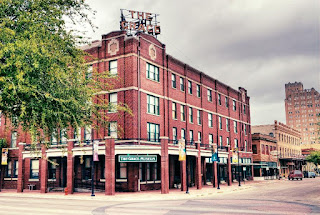
Abilene owes its genesis to the Texas and Pacific and a group of ranchers and land speculators. Before the coming of the railroad, the Abilene area had been sporadically inhabited by nomadic Indians and United States military personnel and later by buffalo hunters and ranchers. By the 1870s the Indians had been driven out, and cattlemen began to graze their herds in the area. Taylor County was organized in 1878, and Buffalo Gap was designated the county seat. When the Texas and Pacific Railway began to push westward in 1880, several ranchers and businessmen—Claiborne W. Merchant, John Merchant, John N. Simpson, John T. Berry, and S. L. Chalk—met with H. C. Whithers, the Texas and Pacific track and townsite locator, and arranged to have the railroad bypass Buffalo Gap. They agreed that the route would traverse the northern part of the county and consequently their own land, and that a new town would be established between Cedar and Big Elm creeks east of Catclaw Creek. C. W. Merchant apparently suggested the name Abilene, after the Kansas cattle town.

After the Texas and Pacific arrived at the site in January 1881 the railroad promoted Abilene as the "Future Great City of West Texas." J. Stoddard Johnston and other railroad officials platted the townsite. Several hundred people arrived in Abilene before the sale of town lots and began to establish businesses and a church. The lots were auctioned on March 15, 1881; in two days buyers purchased more than 300 lots, and Abilene was officially established. On January 2, 1883, the residents voted to incorporate, and in an election held on October 23, 1883, Abilene became the county seat. By 1890 the city had a population of 3,194; twenty years later the number of residents was 9,204.

In slightly more than 100 years Abilene developed from an almost entirely agricultural economy to a diversified economy based on oil, agriculture, commerce, light manufacturing, and service. World War II was the watershed for the city's growth and economic development. The initial and most obvious drawback to Abilene's economic development was a lack of water, since the normal annual rainfall is only 23.78 inches. The city excavated Lytle Lake (1897), Lake Abilene (1919), Lake Kirby (1927), and Lake Fort Phantom Hill (1937) to assure a municipal water supply. Local farmers were urged to diversify their crops in order to protect both themselves and processors in Abilene from losses due to weather, pests, price fluctuations, and other causes outside their control. The city began holding fairs in 1884 to promote the region's agricultural products. Severe droughts in 1909–10 and 1917–18 and the decline of farm prices in the 1920s and 1930s retarded economic growth.
Since prosperity depended also on adequate transportation, civic leaders vigorously sought additional railroad connections and succeeded when the Abilene and Northern and the Abilene and Southern railroads provided north-south connections in the early twentieth century. Efforts to attract the Santa Fe Railroad to Abilene failed. Internal transportation improved with the establishment of the Abilene Street Railway (called the Abilene Traction Company after 1919), which ran streetcar lines from 1908 to 1931. Abilene Electric Light and Power began operation in 1891; a private telephone service began in 1895. City water and electricity were combined in one firm, Abilene Light and Water Company, in 1905. West Texas Utilities was organized in 1923; the gas operations were acquired by Lone Star Gas.

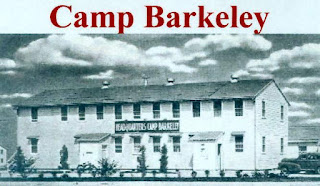
The modern era began for Abilene, as for the rest of Texas, with World War II. The acquisition ofCamp Barkeley, a United States Army post, in 1940 changed the demographic composition, urban landscape, leadership, and outlook of the town. One and one-half million soldiers who spent some time at Barkeley and at the air base at Tye (established in 1943) infused millions of dollars into the local economy. After World War II civic leaders aggressively sought an air force base to maintain the flow of federal dollars, and Congress approved the establishment of Dyess Air Force Base in 1952. In the early 1960s Nike and Atlas missile installations and launching sites were built near the city, but they were phased out within three years.
The oil industry, including the development of exploration, drilling, refining, and oilfield service industries, expanded significantly after World War II. Manufacturing plants increased from 111 in 1979 to 145 in 1982. Parallel expansion occurred in banking, construction, and retail and wholesale business. Service employment expanded dramatically, as it did statewide. Per capita income remained well below the state average until 1950, when figures reflected an 89 percent increase; afterward it approximated the state figure.
In 2010 Abilene had twelve commercial radio stations and one public one, four television stations, and a newspaper—the Abilene Reporter-Newsthe oldest continuously-operated business in the city. Abilene improved its municipal airport in the 1960s and has been served by major carriers and commuter lines.

The population rose from 10,274 to 23,175 between 1920 and 1930. Between 1940 and 1950 it increased from 26,612 to 45,570, and then doubled in the following decade to 90,638. In 1988 the population was 108,157; in 1990 it was 106,654. In 2000 the population grew to 115,930. As in most of West Texas, Anglo-Saxon Protestants predominate in Abilene. Since the first census in 1890, the percentage of whites, including Hispanics, has been 80 percent or above. The 2000 census revealed 8.8 percent black and 19.45 percent Hispanic population. The population was 117,063 in 2010.
Although Abilene began its existence as a rowdy frontier town and shipping point, the citizens quickly founded schools and churches. The first class graduated from Abilene High School in 1888. Black children attended a separate school, founded by their parents in 1890, until they were incorporated into the Abilene school district. The Woodson elementary and high schools were built for black students in 1953 but were closed in 1969 in the general movement to integrate schools. A second high school, Cooper High, opened in 1960. In the early twenty first century Abilene had two school districts, Abilene Independent School District and Wylie Independent School District. Wylie ISD included elementary, middle, and high schools. Abilene ISD had five high schools, including a medical magnet program, as well as four middle schools and fifteen elementary schools. Early in the twentieth century private schools were established; the longest-lived of these was St. Joseph's Academy, founded by theSisters of Divine Providence in 1916. St. Joseph's (later called Central Catholic) educated hundreds of students before it closed in the 1960s. The Episcopal Church opened St. John's School in 1950. Abilene sought and acquired a Baptist college, Simmons College (now Hardin-Simmons University), in 1891. Abilene Christian College (now Abilene Christian University) first opened as Childers Classical Institute in 1906. McMurry College (now McMurry University), a Methodist school, opened in 1923. Cisco Junior College began offering courses in Abilene in the 1970s. In 2010 Abilene also had the Texas Tech University Health Sciences Center and Texas State Technical College West Texas.
The dominant religious groups in Abilene have been Baptist, Church of Christ, and Methodist; Presbyterians, Lutherans, Episcopalians, Disciples of Christ, and Catholics have been present in smaller numbers. From the beginning, there was an attempt to tame the frontier and make Abilene a town congenial for rearing families. The initial efforts to abolish saloons were successful in 1903; the city was legally dry until 1978, when a fiercely contested election to legalize the sale of alcoholic beverages barely succeeded. Abilene had already been bracketed by two wet communities—Impact and Buffalo Gap—since the 1960s. Until the 1930s virtually all local charity was conducted by the churches; they sponsored and funded day-care centers and nurseries and programs for elderly citizens, civic improvement, disadvantaged youth, and disaster relief. For decades churches provided the principal arena for women's community involvement. This religious environment has been reinforced by the presence of the three church-related colleges. By the early twenty first century there were more than 100 churches in the city.
Cultural interests are reflected in the profusion of dramatic clubs, Chautauqua circles, community bands, and literary guilds. The first social and cultural organization for women was founded in 1883; the City Federation of Women's Clubs dates from 1898. The women's clubs were successful in establishing the Carnegie Library, which opened in 1909. The original building served the city until the 1950s, when it was razed to make way for a new library building. In the 1960s citizens approved bonds for the construction of the Abilene Civic Center and the Taylor County Coliseum. The Abilene Philharmonic Orchestra gave its first concert in 1950. Active little-theater groups, ballet companies, a civic chorus, an art museum, a community band, and an opera association support the fine arts.
In the 1930s Abilenians enjoyed polo and horse and auto racing at Fair Park. In 1946 individuals invested money to fund a professional baseball team, the Abilene Blue Sox. The club, an affiliate of the Brooklyn Dodgers, boasted a .708 winning percentage in 1946. The Blue Sox operated until 1957. In 1981 the LaJet Classic at Fairway Oaks Golf and Racquet Club was added to the PGA tour. Popular recreation areas near Abilene are Fort Phantom Hill Reservoir and Abilene State Park. Abilene has public swimming pools, art galleries, a zoo, and numerous city parks. The West Texas Fair & Rodeo attracts large crowds to the city annually.
At its incorporation Abilene adopted a mayoral form of government and elected Dan B. Corley first mayor. In 1911 the city changed to a home-rule charter that provided for a mayor, four commissioners, and several city offices. Since 1947 it has had a city-manager form of government. For the last several decades Abilenians have generally favored Republican candidates in national elections.
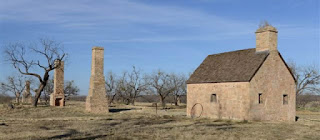
In 1959 Abilene made extensive improvements to the downtown area. But major population movement in the 1970s and 1980s, spurred by the location of Cooper High School, the Mall of Abilene, and Fairway Oaks, was south toward Buffalo Gap. Most commercial establishments left downtown Abilene. The ruins of Fort Phantom Hill, north of Abilene, and Buffalo Gap Historic Village, south of the city, are the major historic sites nearby. Abilene also offers a variety of art and history museums, including The Grace Museum, Frontier Texas!, the National Center for Children’s Illustrated Literature, and the 12th Armored Division Memorial Museum.
BIBLIOGRAPHY: 
Abilene Convention and Visitors Bureau (http://www.abilenevisitors.com/), accessed May 13, 2014. Fane Downs, ed., The Future Great City of West Texas: Abilene, 1881–1981 (Abilene: Richardson, 1981). Katharyn Duff, Abilene . . . On Catclaw Creek: A Profile of a West Texas Town (Abilene, Texas: Reporter Publishing, 1969). Katharyn Duff and Betty Kay Seibt, Catclaw Country: An Informal History of Abilene in West Texas (Burnet, Texas: Eakin Press, 1980). Paul D. Lack et al., The History of Abilene (Abilene, Texas: McMurry College, 1981). Juanita Daniel Zachry, Abilene (Northridge, California: Windsor, 1986).


Thursday, May 26, 2016


ABILENE HOUSING STATISTICS FOR APRIL 2016

Abilene home sales rose 5 percent to 146 homes in April 2016. The median price for Abilene homes increased 5 percent year-over-year to $140,950 in April 2016.

Abilene’s monthly housing inventory was 3.3 months in April 2016, 0.4 months more than the year prior. The Real Estate Center at Texas A&M University cites that 6.5 months of inventory represents a market in which supply and demand for homes is balanced.

Homes spent an average of 52 days on the market in April 2016, two days less than April 2015. Additionally, active listings increased 22 percent to 454 listings during the same time frame.

April 2016 Statistics At-A-Glance
·         146 – Homes sold in April 2016, 5 percent more than April 2015.
·         $140,950 – Median price in April 2016, 5 percent more than April 2015.
·         3.3 – Monthly housing inventory in April 2016, 0.4 months more than April 2015.
·         52 – Average number of days homes spent on the market in April 2016, two days less than April 2015.
·         454 – Active home listings on the market in April 2016, 22 percent more than April 2015.

As you can see, Abilene still has a strong housing market.  If you would like a FREE market analysis for YOUR home, please let us know!


Monday, April 25, 2016


Ten Things to Know About 1031 Exchanges


Contributor:  Robert W. Wood

Tax nerds may be able to spout off Internal Revenue Code Sections, but most people never get beyond 401(k). (That’s right, your workplace retirement savings plan is named after a section of the tax code.)
Still, “Section 1031″ is slowly making its way into daily conversation, bandied about by realtors, title companies, investors and soccer moms. Some people even insist on making it into a verb, a la FedEx , as in: “Let’s 1031 that building for another.” (While Section 1031 isn’t restricted to real estate, that’s clearly where most of the discussion takes place.)
So what is 1031? Broadly stated, a 1031 exchange (also called a like-kind exchange or a Starker) is a swap of one business or investment asset for another. Although most swaps are taxable as sales, if you come within 1031, you’ll either have no tax or limited tax due at the time of the exchange.
In effect, you can change the form of your investment without (as the IRS sees it) cashing out or recognizing a capital gain. That allows your investment to continue to grow tax deferred. There’s no limit on how many times or how frequently you can do a 1031. You can roll over the gain from one piece of investment real estate to another to another and another. Although you may have a profit on each swap, you avoid tax until you actually sell for cash many years later. Then you’ll hopefully pay only one tax, and that at a long-term capital gain rate (currently 15%).
Warning: Special rules apply when depreciable property is exchanged in a 1031. It can trigger gain known as “depreciation recapture” that is taxed as ordinary income. In general, if you swap one building for another building, or one machine for another machine, you can avoid this recapture. But if you exchange improved land with a building for unimproved land without a building, the depreciation you’ve previously claimed on the building will be recaptured as ordinary income.
Such complications are why you need professional help when you’re doing a 1031. Still, if you’re considering a 1031–or just curious–here are 10 things you should know.
1. A 1031 isn’t for personal use.
The provision is only for investment and business property, so you can’t swap your primary residence for another home. There are ways you can use a 1031 for swapping vacation homes, but this loophole is much narrower than it used to be. For more details, see No. 10.
2. But some personal property qualifies.
Most 1031 exchanges are of real estate. However, some exchanges of personal property (say a painting) can qualify. Note, however, that exchanges of corporate stock or partnership interests don’t qualify. On the other hand, interests as a tenant in common (sometimes called TICs) in real estate do.
3. “Like-kind” is broad.
Most exchanges must merely be of “like-kind”–an enigmatic phrase that doesn’t mean what you think it means. You can exchange an apartment building for raw land, or a ranch for a strip mall. The rules are surprisingly liberal. You can even exchange one business for another. But again, there are traps for the unwary.
4. You can do a “delayed” exchange.
Classically, an exchange involves a simple swap of one property for another between two people. But the odds of finding someone with the exact property you want who wants the exact property you have are slim. For that reason the vast majority of exchanges are delayed, three party, or “Starker” exchanges (named for the first tax case that allowed them). In a delayed exchange, you need a middleman who holds the cash after you “sell” your property and uses it to “buy” the replacement property for you. This three party exchange is treated as a swap.
5. You must designate replacement property.
There are two key timing rules you must observe in a delayed exchange. The first relates to the designation of replacement property. Once the sale of your property occurs, the intermediary will receive the cash. You can’t receive the cash or it will spoil the 1031 treatment. Also, within 45 days of the sale of your property you must designate replacement property in writing to the intermediary, specifying the property you want to acquire.
6. You can designate multiple replacement properties.
There’s long been debate about how many properties you can designate and what conditions you can impose. The IRS says you can designate three properties as the designated replacement property so long as you eventually close on one of them. Alternatively, you can designate more properties if you come within certain valuation tests. For example, you can designate an unlimited number of potential replacement properties as long as the fair market value of the replacement properties does not exceed 200% of the aggregate fair market value of all the exchanged properties.
7. You must close within six months.
The second timing rule in a delayed exchange relates to closing. You must close on the new property within 180 days of the sale of the old. Note that the two time periods run concurrently. That means you start counting when the sale of your property closes. If you designate replacement property exactly 45 days later, you’ll have 135 days left to close on the replacement property.
8. If you receive cash, it’s taxed.
You may have cash left over after the intermediary acquires the replacement property. If so, the intermediary will pay it to you at the end of the 180 days. That cash–known as “boot”–will be taxed as partial sales proceeds from the sale of your property, generally as a capital gain.
9.You must consider mortgages and other debt.
One of the main ways people get into trouble with these transactions is failing to consider loans. You must consider mortgage loans or other debt on the property you relinquish, and any debt on the replacement property. If you don’t receive cash back but your liability goes down, that too will be treated as income to you just like cash. Suppose you had a mortgage of $1 million on the old property, but your mortgage on the new property you receive in exchange is only $900,000. You have $100,000 of gain that is also classified as “boot,” and it will be taxed.
10. Using 1031 for a vacation house is tricky.
You can sell your primary residence and, combined with your spouse, shield $500,000 in capital gain, so long as you’ve lived there for two years out of the past five. But this break isn’t available for your second or vacation home. You might have heard tales of taxpayers who used a 1031 to swap one vacation home for another, perhaps even for a house where they want to retire. The 1031 delayed any recognition of gain. Later they moved into the new property, made it their primary residence and eventually planned to use the $500,000 capital gain exclusion.
In 2004 Congress tightened that loophole. Yes, taxpayers can still turn vacation homes into rental properties and do 1031 exchanges. Example: You stop using your beach house, rent it out for six months or a year and then exchange it for other real estate. If you actually get a tenant and conduct yourself in a businesslike way, you’ve probably converted the house to investment property, which should make your 1031 exchange OK. But if you merely hold it out for rent but never actually have tenants, it’s probably not. The facts will be key, as will the timing. The more time that elapses after you convert the property’s use the better. Although there is no absolute standard, anything less than six months of bona fide rental use is probably not enough. A year would be better.
If you want to use the property you swapped for as your new second or even primary home, you can’t move in right away. In 2008 the IRS set forth a safe harbor rule under which it said it would not challenge whether a replacement dwelling qualified as investment property for purposes of a 1031. To meet that safe harbor, in each of the two 12-month periods immediately after the exchange: (1) you must rent the dwelling unit to another person for a fair rental for 14 days or more; and (2) your own personal use of the dwelling unit cannot exceed the greater of 14 days or 10% of the number of days during the 12-month period that the dwelling unit is rented at a fair rental.
Moreover, after successfully swapping one vacation/investment property for another, you can’t immediately convert it to your primary home and take advantage of the $500,000 exclusion. Before the law was changed in 2004 an investor might transfer one rental property in a 1031 exchange for another rental property, rent out the new rental property for a period of time, move into the property for a few years and then sell it, taking advantage of exclusion of gain from the sale of a principal residence. Now, if you acquire property in the 1031 exchange and later attempt to sell that property as your principal residence, the exclusion will not apply during the five-year period beginning with the date the property was acquired in the 1031 like-kind exchange. In other words, you’ll have to wait a lot longer to use the primary residence capital gains tax break.
Robert W. Wood is a tax lawyer with a nationwide practice. The author of more than 30 books including Taxation of Damage Awards & Settlement Payments (4th Ed., 2009), he can be reached at wood@woodporter.com. This discussion is not intended as legal advice and cannot be relied upon for any purpose without the services of a qualified professional.
If you would like help finding YOUR next home, please give us a call...we would love to help YOU!